
Elizabeth López Méndez
English as a Second Language Teacher
"If we want to learn about fostering transformation among our learners, the most important way to begin the work is with this particular, common, and sacred life one has been given. It is a simple and humble, yet incredibly profound, place to begin". I recently encountered this insight by Dirkx during my PGCE studies, and it resonated deeply because I realized I had been embodying this principle long before I knew its name. Early in my career, I measured success by syllabus coverage and standardized tests, yet I felt something essential was missing. That changed when a student quietly shared that she wanted to become an English teacher because of my lessons. That confession shifted something inside me. I realized I was not just teaching vocabulary or grammar; I was shaping lives. Without knowing formal frameworks, I was already transforming how I saw my role: from content deliverer to a transformation maker. Reading theorists years later gave language to what I had been doing: meaningful education starts with self-awareness and authentic connection. Today, I intentionally build on that foundation.
China
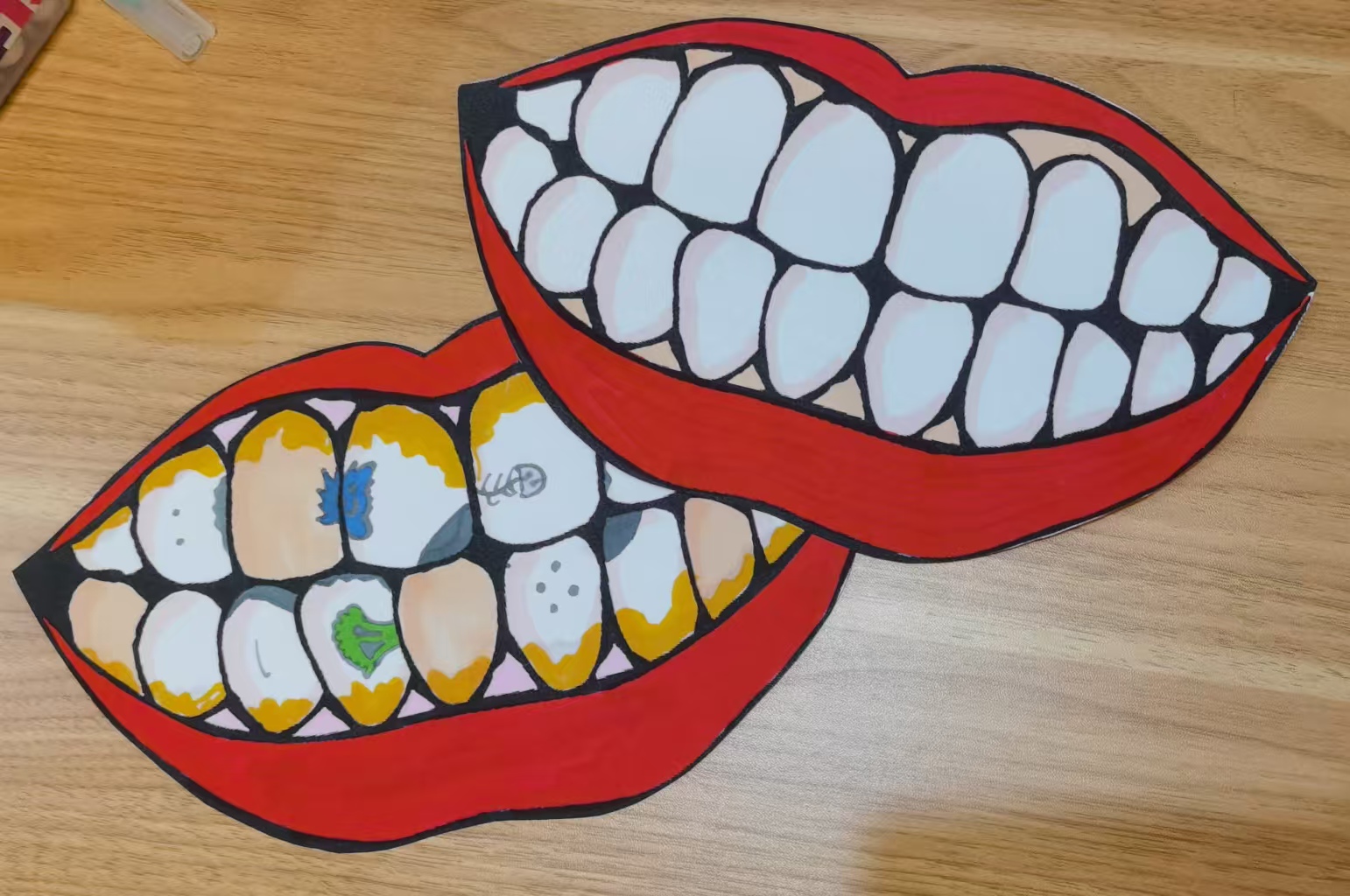
Arts Projects in class
Teaching Videos
Teaching Philosophy
"If we want to learn about fostering transformation among our learners, the most important way to begin the work is with this particular, common, and sacred life one has been given. It is a simple and humble, yet incredibly profound, place to begin". I recently encountered this insight by Dirkx during my PGCE studies, and it resonated deeply because I realized I had been embodying this principle long before I knew its name. Early in my career, I measured success by syllabus coverage and standardized tests, yet I felt something essential was missing. That changed when a student quietly shared that she wanted to become an English teacher because of my lessons. That confession shifted something inside me. I realized I was not just teaching vocabulary or grammar; I was shaping lives. Without knowing formal frameworks, I was already transforming how I saw my role: from content deliverer to a transformation maker. Reading theorists years later gave language to what I had been doing: meaningful education starts with self-awareness and authentic connection. Today, I intentionally build on that foundation. I have been teaching English as a foreign language to learners ranging from three- to fourteen-year-old for the past 7 years. While my methods shift across developmental stages, my core belief remains constant: every student can learn, and my responsibility is to discover how. With my younger learners, I use a play-based learning approach following Froebel’s principle that states “play is the highest form of learning”. Recently, my four-year-old students learned directional vocabulary by constructing an obstacle course: they had to "crawl under," "jump over" and "go through." With teenagers, I like to connect language to their lived experiences. I frame language targets around structured debates, student-led presentations, and mini-experiments that require verbal reporting. When learners use target structures to argue a position or explain a process, accuracy improves because the language has relevance. I follow a holistic approach to child development since my goals extend beyond linguistic accuracy. To help raise balanced children for the 21st Century, we, as teachers, need to pay attention to their social, physical, emotional and cognitive development. I care about how students think and how they feel, because memorizing for exams won't help them navigate everyday challenges. Help them go through this, it is also part of my job as a teacher too. Rapport-building is key to this. I like to learn students’ names, interests, and preferences within the first week to build trust and communication. It makes my students more willing to take risks, experiment with language without being ashamed when making mistakes, and transform our way of thinking. I want students to feel excited about learning, but I also hold them accountable for staying on task and working diligently. To achieve this, I draw on Vygotsky’s Zone of Proximal Development for pacing instruction. I aim for tasks that are achievable yet demanding, knowing that growth happens when students are stretched but supported. I plan my assessments using Backward Design: I start with clear learning goals, and then create tasks that directly check for those skills, always making sure the work matches my students’ age and ability. In my school, I use three different programs to teach English to young learners, and even though we have a series of standardized tests, I assess my students in numerous other ways. In Our World program, for example, I scaffold end-of-unit paragraph writing by having students produce one targeted sentence per lesson, allowing me to adjust support before the final product. For Show & Tell, I assess through inquiry-based play and hands-on exploration, observing how students manipulate materials and articulate discoveries. In Oxford Discovery, where speaking is prioritized, I like to prepare structured discussions, mini-experiments with verbal reporting, and student-led debates. These varied pathways ensure assessment measures growth, not just recall. I believe in inclusive classrooms, but creating one requires intentional design from teachers and support from school leadership. In my classroom, visual learners receive graphic organizers, kinesthetic learners engage in movement-based tasks, and advanced students take on peer-mentor roles. I layer these strategies into every lesson to keep all students engaged. But beyond academic preferences, I focus on normalizing difference. When a student with a hearing disability joined my class and peers were making fun of her pronunciation, I guided an open conversation to help them view her speech as naturally different rather than something to single out. For neurodivergent learners, I build small, predictable routines into daily lessons; these consistent structures reduce anxiety and create clear, low-pressure ways to participate. With disruptive students, I now avoid public correction and instead I assign classroom responsibilities to help them feel seen and heard, improving their focus and peer relationships. Inclusion, for me, is not a policy: it is daily, intentional relationship-building. My practice continues to evolve. I am learning to step back, trusting students to lead discussions even when silence feels uncomfortable. I believe teaching is not a destination but an ongoing conversation between my aspirations, my students' needs, and the world they will inherit. Each day reminds me why I am still doing this work: not to produce perfect scores, but to witness transformation.
Experience
English and Spanish as a Second Language teacher
Awesome English, Binhai, Tianjin, China
May 2021 — Present · 5 yrs 3 mos
Full-timeHybrid
- Teaching young learners ages 2 to 14 years old
- Lesson planning following school curriculum
- Students’ assessment
English as a Second Language teacher
Best Baby International English, Yingtan, Jiangxi, China
May 2020 — Apr 2021 · 1 yr
Full-timeHybrid
- Teaching young learners ages 3 to 9 years old
- Lesson planning following school curriculum
- Students’ assessment
- Periodic parents’ feedback
ESL Teacher
Jilin Younovo Education, Changchun, China
Jun 2019 — Apr 2020 · 11 mos
Full-timeHybrid
- Teaching young learners ages 3 to 12 years old
- Lesson planning following school curriculum
- Students’ assessment
Customer Service Representative
GAVIOTA S.A. Head Management Eastern Division, Playa Pesquero Beach and Spa Resort
Jun 2018 — May 2019 · 1 yr
Full-timeHybrid
- Maintaining positive relationships with existing customers
- Training new member of Help-desk in all areas of support
- Answering requests and reviews on Trip Advisor
Part time Teaching Assistant Student
University of Holguin
Sep 2015 — Jun 2018 · 2 yrs 10 mos
Full-timeHybrid
- Writing teacher from 2015 to 2016
- English to Spanish translation teacher from 2016 to 2017
- Comparative Studies teacher from 2016 to 2017
Skills
Prior teaching experienceSpoken languages: English and Spanish (advanced level)Spoken languages: French (intermediate level)Strong attention to detailGoal oriented
Education
Master's in Education
UCAM - Catholic University San Antonio de Murcia, Spain
Jan 2026 - Present
Other
PGCE – Postgraduate Certificate in Education
UCAM - Catholic University San Antonio de Murcia, Spain
Jan 2026 - Jul 2026
Other
- Core educational principles of curriculum design, pedagogy, assessment, and learning theories explored alongside established and emerging trends in international education.
Master’s Degree in Specialized Translation: Literary Translation
ISTRAD, Spanish Institute
Sep 2021 - Sep 2023
Other
- Translation from English to Spanish and English Literature.
Diploma in Early Childhood Education and Development
Alison Online Learning
Date - Nov 2025
Other
- Covers child development basics and curriculum design.
Teaching Spanish as a Foreign Language 150 hours Teaching Certificate
European University Miguel De Cervantes, Spain
Jul 2021 - Dec 2021
Other
- Included lesson planning, teaching materials creation, methods, procedures, techniques, linguistic or methodological models; creating and applying assessing materials.
Level 5 TEFL Certificate (168hrs)
The TEFL Academy, UK
Nov 2018 - Mar 2019
Other
- Included creating lessons and teaching materials; teaching speaking, listening, reading and writing; material & resource creation; needs analysis; classroom management; teaching techniques; language analysis – vocabulary, grammar and pronunciation.
Bachelor’s Degree in English Language with French as a Second Language
University of Holguin
Sep 2012 - Jun 2018
Other
- Included English and French as second languages; terminology; translation; interpretation; USA and UK literature; UK, USA and French history; speaking; writing; reading and comprehension; phonetics and phonology; English grammar; linguistics; didactics.